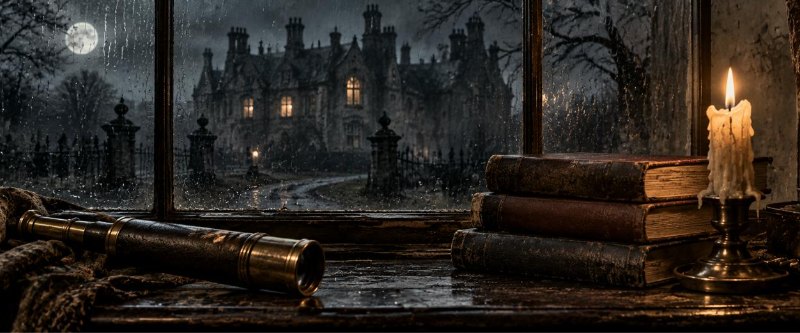
Thirteen books, a narrator who spends most of them begging you to stop reading, and three orphans whose luck never improves. The order is unusually easy — the books are numbered on the cover and the plot runs straight through — but the numbering hides the thing that actually matters here, which is that this series is not a set of standalone adventures. It is one long story cut into thirteen pieces.
Here is the whole run in order, plus the one companion book and the honest answer about where most readers stop.
The short answer
Start with The Bad Beginning and read by number to thirteen. Do not skip. Unlike most middle grade series, the running mystery here — the fire, the spyglass, the initials V.F.D. — is built out of details planted books earlier, and a reader who jumps in at seven will be lost in a way that is not enjoyable.
Do you have to read them in order?
Yes, more than almost any series at this level. Books one through four look self-contained: a new guardian, a new disguise for Count Olaf, a new disaster. From book five onward the Baudelaires stop being passed between relatives and start investigating, and from book eight the plot is continuous. The last four books are effectively one novel.
The books also get harder as they go. The first is about 160 pages of short sentences; the tenth is longer, denser and considerably bleaker. That gradient is deliberate and it is one of the reasons the series works for a reader who starts at nine and finishes at twelve.
Every A Series of Unfortunate Events book in order
- The Bad Beginning
- The Reptile Room
- The Wide Window
- The Miserable Mill
- The Austere Academy
- The Ersatz Elevator
- The Vile Village
- The Hostile Hospital
- The Carnivorous Carnival
- The Slippery Slope
- The Grim Grotto
- The Penultimate Peril
- The End
The companion book
There is one, and it is genuinely strange: Lemony Snicket: The Unauthorized Autobiography. It is not a story. It is a scrapbook of letters, photographs and documents that fills in the V.F.D. material the novels only hint at. Read it after book nine at the earliest — before that it spoils things, and after book thirteen it answers questions the ending deliberately left open.
Where readers actually stop
Book four, usually. The pattern of the first four is so consistent that a reader can mistake it for the whole series and lose interest. If that happens, the honest thing to say is that book five changes the format and book six is where it becomes a different and better series. Getting past four is the whole game.
A note on the ending
It does not resolve everything, on purpose, and some readers find that infuriating. It is worth warning a child in advance that the last book is called The End and means it less than they expect. Framed that way it tends to land as a choice rather than a failure.
Keep browsing
Every book above has a page in our catalog. For another long series with a running plot rather than standalone episodes, see our Wings of Fire reading order. If the Gothic tone is the appeal, try mysteries for tweens, and for something lighter after thirteen books of misery, the funniest books for tweens.